domingo, 12 de agosto de 2018

A passion for Mexican modernism: The Lewin Family Collection

- Christies 2017-

Masterworks from the personal collection of Bernard Lewin, a pioneer in the market for Mexican art, are offered in the Latin American Art sales on 22 & 23 November


For generations, the Lewin family of Palm Springs, California, has been passionately dedicated to the study, promotion and collecting of Latin American art. Their legacy began in 1954 when Bernard Lewin (1906-2003) saw his first painting by Mexican modernist Rufino Tamayo. From that chance encounter, Lewin went on to amass one of the largest personal collections of Mexican modernism in the United States and to introduce countless individuals to the artists he so loved through his eponymous galleries in Beverly Hills and Palm Springs. 

Lewin arrived in California in 1938 after fleeing Nazi Germany with his wife Edith (1911-1999) and their four-year-old son and only child Ralph. He began making a living for his family by moving furniture before moving on to buying and selling estates and eventually opening his own furniture store. 

Slowly he began to notice not only the furniture but also the fine art collections of his clients and was inspired to learn more. Determined to meet some of the artists he had come to admire and better familiarise himself with their work, Lewin made his first trip to Mexico in 1958. He visited the studio of  Federico Cantú and bought some Engravings , cavas and asks the artist to design the logo of the Gallery, also visit Diego Rivera and bought some of the deceased artist’s sketchbooks from the 1930s.
Fascinated by Mexican art, Lewin eventually gave up the furniture business and established his art gallery in 1968 in Beverly Hills, where he championed the work of such luminaries as Rufino Tamayo, Federico Cantú, Ricardo Martinez, Alfredo Ramos Marinez, Jesús Guerrero Galvan Diego Rivera, David Alfaro Siqueiros, Carlos Mérida, Francisco Zúñiga and many others now offered for sale at Christie’s.


LACMA The Lewin Family Collection  mexican-mural-study-federico-cantú


martes, 1 de mayo de 2018

Federico Cantú
Colección de Arte F Cantú F & Elsa E de Cantú

Fede mi hijo 1929-2013
Los Ángeles California 1 de mayo de 1929
Ciudad de México 31 de mayo de 2013

miércoles, 18 de abril de 2018

El 13 de abril de 1929 Federico Cantú envía una carta a su entonces amigo y cuñado  Alfonso Fabila , la carta incluye una tinta alusiva a la figura de Ícaro , elemento que utilizara para la obra titulada Homenaje a Lord Byron , unos días depuse el 1 de mayo de 1929 nace el hijo de Federico Y Luz ( en california ) y es registrado con el nombre de ICARO

Federico Cantú 1907-1989


Federico Cantú Fabila
Los Ángeles California 1 de Mayo de1929
Tlalpan Ciudad de México 31 de Mayo de 2013

miércoles, 4 de abril de 2018


STENDAHL GALLERIES
Founded, 1911
The two-house compound where author April lives on an avenue in the Hollywood Hills has been home to her husband's family business, Stendahl Galleries, since 1940. For twenty years prior, Earl L. Stendahl provided the finest examples of Impressionist and Modern art to the elite of Los Angeles collectors from his renowned galleries on Wilshire Boulevard. Stendahl was lured to the Hollywood neighborhood by collector Walter Arensberg, who, with Stendahl's help, amassed what was called by an art historian in 1950 "the most discriminating single group of twentieth century paintings and sculpture in existence."
Such was Stendahl's influence on the Southern California landscape, which began in 1911 and lasted well beyond his passing in 1966, when son Alfred Stendahl and son-in-law Joseph Dammann (already veteran dealers) carried on the business. Few remember that in 1939 Stendahl hosted one of only two non-museum exhibitions of Pablo Picasso's masterwork, Guernica, to benefit Spanish refugees. That historic showing was one of many pioneering efforts by Stendahl Galleries to bring important artworks to the attention of a public hungry for exposure to fine art.

Earl L. Stendahl was born in Menomonie, Wisconsin of Norwegian descent to a large family of confectioners. In San Diego, California, Stendahl began selling the works of local painters and opened his first gallery at the inauguration of the Ambassador Hotel in Los Angeles in 1921. Stendahl emerged as one of the most innovative and influential art dealers in Southern California. By the 1930s, the gallerist had established his reputation as the premier dealer in painters of the California Impressionist School. William Wendt, Guy Rose, Edgar Payne, Joseph Kleitsch and Nicolai Fechin were part of the early Stendahl stable of artists. Moving to larger quarters on Wilshire Boulevard, Stendahl introduced Modern art to the West Coast with works by Matisse, Chagall, Klee, Feitelson, Siqueiros, Cantú, Kandinsky, Braque and Picasso. In 1939 his gallery was one of only two non-museum venues in the U.S. to exhibit Pablo Picasso's masterwork, Guernica as a fundraiser for Spanish war orphans.
As early as 1935, Stendahl began promoting ancient artifacts from Mexico and Central America before branching out to become a significant dealer of the Pre-Columbian art of his day. Stendahl's son, Alfred E. Stendahl and son-in-law, Joseph Dammann, joined the family business. The gallery's archives were donated to the Smithsonian Institution's Archives of American Art in 1976.The Stendahl Gallery continues to operate, celebrating its centennial in 2011, with Earl Stendahl's grandson, Ronald W. 
Dammann, presiding

martes, 20 de marzo de 2018


Spring is one of the four conventional temperate seasons, following winter and preceding summer. There are various technical definitions of spring, but local usage of the term varies according to local climate, cultures and customs. When it is spring in the Northern Hemisphere, it will be autumn in the Southern Hemisphere. At the spring equinox, days are approximately 12

 hours long with day length increasing as the season progresses. Spring and "springtime" refer to the season, and also to ideas of rebirth, rejuvenation, renewal, resurrection and regrowth. Subtropical and tropical areas have climates better described in terms of other seasons, e.g. dry or wet, monsoonal or cyclonic. Often, cultures have locally defined names for seasons which have little equivalence to the terms originating in Europe.

martes, 13 de marzo de 2018


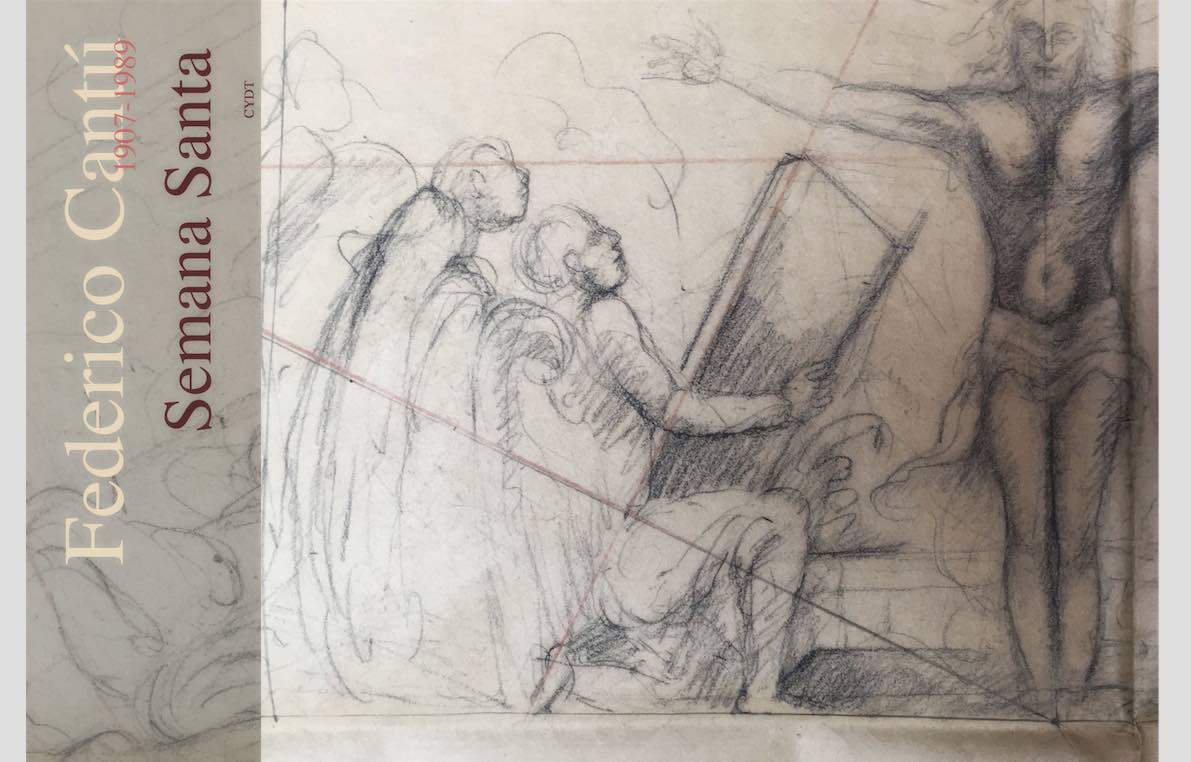
Holy Week (Latin: Hebdomas Sancta or Hebdomas Maior, "Greater Week"; Greek: Ἁγία καὶ Μεγάλη Ἑβδομάς, Hagia kai Megale Hebdomas, "Holy and Great Week") in Christianity is the week just before Easter. In the West, it is also the last week of Lent, and includes Palm Sunday, Holy Wednesday (Spy Wednesday), Maundy Thursday (Holy Thursday), Good Friday (Holy Friday), and Holy Saturday. It does not include Easter Sunday, although traditions observing the Easter Triduum may overlap or displace part of Holy Week or Easter itself within that additional liturgical period.
La Madona en la obra de Federico Cantú 1907-1989


Una larga y fructífera evolución de formas en torno a la Madona
Grabado , obra mural , tinta , escultura , relieves …………

Dan forma a uno de los símbolos mas importantes de la estética Mexicana
Es Cantú uno de los mas grandes maestros que logra en su obra la síntesis 
Sacra y profana , Europea y mesoamericana , una fusión de identidad 
Prehispánica y Occidental fundidas a la para en una amalgama cultural
 En estas composiciones nos solo admiramos el estilo propio del maestro
de paso las imágenes cohabitan en la intemporalidad donde se extiende la creación Cantú

Adolfo Cantú
Colección de Arte Cantú Y de Teresa


Textos Adolfo Cantú
Colección Cantú Y de Teresa
Copyright © 1989-2018

FCG Copyright ©