viernes, 17 de junio de 2016

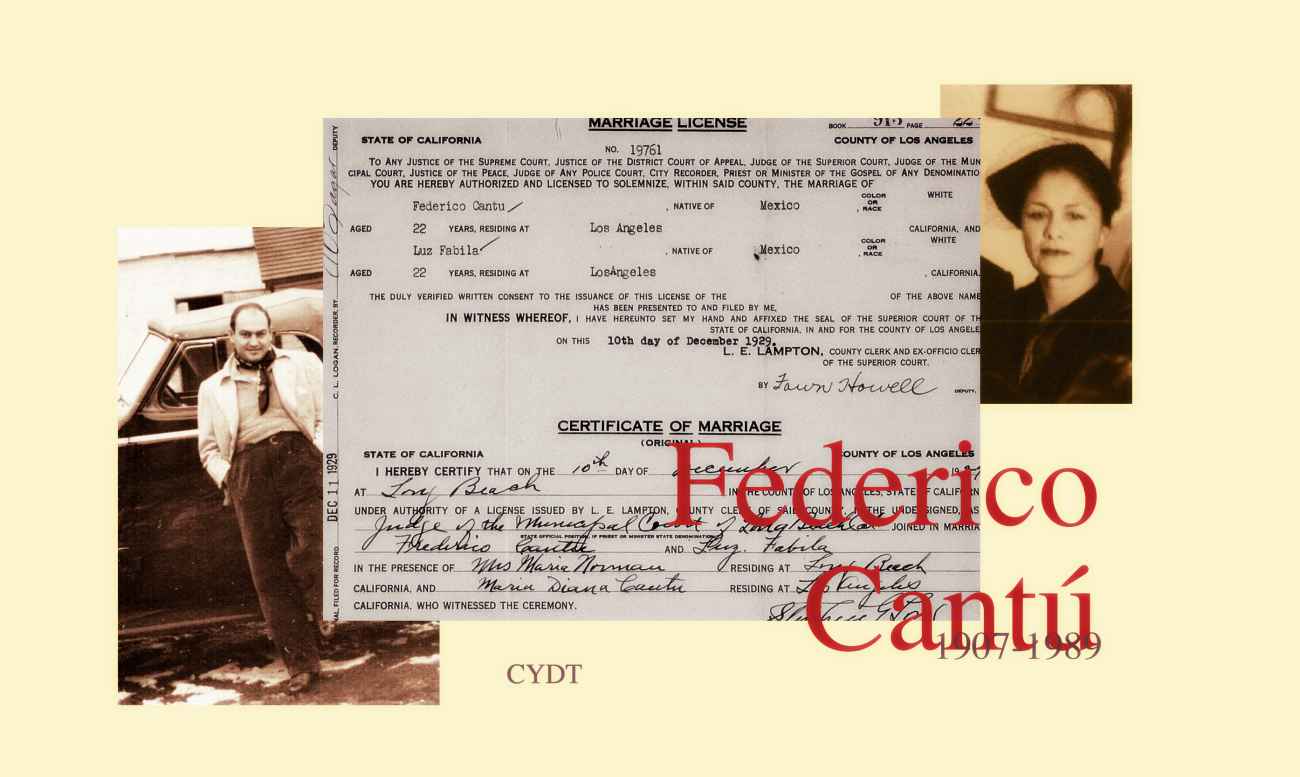
Federico Cantú  1907-1989
“Dolorosa”
1938

Exposiciones

MOMA 1940
GAM 1942
Art Club Chicago 1945
Pan American Union Washington DC 1950
Palacio de la Bellas Artes 1970


La pintura sacra siempre me ha fascinado, toda ella esta relacionada con la concepción y temática Bíblica , si bien tenemos un despertar de esta temática desde el medievo
Es el renacimiento el que verdaderamente recoge y profundiza el arte sacro.
El tema que hoy tratamos se titula “Dolorosa”
Y si bien entendemos como  La Virgen de los Dolores una advocación de la Virgen Maria. También es conocida como Virgen de la Amargura, Virgen de la Piedad, Virgen de las Angustias o La Dolorosa. Su fiesta es el viernes de Dolores 15 de Septiembre: su vestidura por lo normal es negra o morada.
Se la invoca en latín como Maria Virgo Perdolens o Mater Dolorosa


Pero esta obra incluida hoy en dia en la Colección de Arte Cantú Y de Teresa , tiene mas connotaciones de lo que rápidamente podríamos entender y para ello volvemos la historia a la segunda mirad de los años 30, época de grandes cambios dentro de la biografía pictórica de Federico Cantú.

Federico Cantú se enredo en amores con Gloria Calero Sierra a principios de 1937 quien en ese momento se encontraba casada con el Director de Cine Chano Urueta,  la pasión se convirtió en disputa conyugal surgiendo de inmediato un divorcio y un matrimonio , de esa manera Gloria se convierte por siempre en la musa del artista desde esa primavera de 1937

En 1938 y con una dinámica de exposiciones internacionales que recién iniciaba la GAM, Federico ve la oportunidad de instalar su Atelier en Nueva York , donde trabajara una inmensa producción de obra de caballete entre estas obras de época surge “Dolorosa” donde Cantú retrata como a Gloria y le otorga el grado de santidad,

Escribe Cantú a Gloria NY 1938  :

Me asusto cada vez que analizo lo poco que he adelantado en lo que se refiere  a lo practico. Vengo a Nueva York a hacer  una exposición y me encuentro de pronto de tal manera furioso por la pintura que si tu lo vieras  no lo podrías creer,   de mi persona te platico que traigo el pelo  mas descuidado que nunca y trabajo en chanclas pantalón de pana y sweater y estoy ligado  como un vicioso  al cuadro de 8 a 10,  de 11 a 12 el de la tarde la noche es tuya y doy los últimos toques a tu retrato.
Aquí hay mucho dinero y estoy  seguro de que voy a ganarlo a manos llenas pero no puedo hacerlo  sin conocer a nadie en las galerías, , ir con el cuadrito debajo del brazo es el peor sistema si da resultado, en las películas,  y dos o tres veces con Inés y Misrachi, esto es muy distinto.


textos Adolfo Cantú
Colección Cantú Y de Teresa
Copyright © 2016.
FCG Copyright ©


miércoles, 18 de mayo de 2016

Jesús Guerrero Galván (b. June 1, 1910 – d. May 11. 1973) was a Mexican artist, a member of the Mexican muralism movement of the early 20th century. He began his career in Guadalajara but moved to Mexico City to work on mural projects in the 1930s for the Secretaría de Educación Pública and Comisión Federal de Electricidad In addition, he did easel paintings, with major exhibitions in the United States and Mexico. In 1943, he was an artist-in-residence for the University of New Mexico, painting the mural Union of the Americas Joined in Freedom, considered to be one of his major works. Guerrero Galván was accepted as a member of the Salón de la Plástica Mexicana.
Federico Heraclio Cantú Garza (March 3, 1907 – January 29, 1989) was a Mexican painter, engraver and sculptor. While considered to be a member of the Mexican muralism movement, his style was noticeably different, mostly for adhering to older and more academic forms of painting and sculpture. He has his most success exhibiting in the United States and Europe, but he did murals and sculptures in Mexico. His best known work is a sculpture called “La maternidad” which has been adapted as logo of the Instituto Mexicano de Seguro Social (IMSS)
Guillermo Meza (September 11, 1917 – October 2, 1997) was a Mexican painter, known for his oils depicting fantastic background and often distorted human figures, generally with denunciations of society. He was born to a Tlaxcalteca indigenous father of modest means, but his parents had interest in the arts, history and literature. Meza showed interest in art and music in his youth, studying painting with Santos Balmori. Later, he approached Diego Rivera to look for an apprenticeship, but instead, the painter recommended him to the prestigious Galería de Arte Mexicana, which helped him develop as an artist as well as promoted his work for twenty years. Meza won various awards for his work during his career and was also granted membership in the Salón de la Plástica Mexicana.
The Galería de Arte Mexicano (GAM) was founded by Carolina and Inés Amor on 7 March 1940, in Mexico City and has been the first gallery of Mexican art. The gallery building was the first building in Mexico of Andrés Casillas de Alba.
The intention of the GAM is to establish national artists as well as the promotion of young artists. The collection of the GAM includes items of modern, Mexican and contemporary art. In 1940 the gallery had its first exhibition of Surrealist art organized by the Austrian Surrealist Wolfgang Paalen and the Peruvian poet César Moro. Altogether the GAM organized more than 900 exhibitions including well-known exhibitors like Diego Rivera, José Clemente Orozco, David Alfaro Siqueiros, Miguel Covarrubias, Miguel Condé, Rufino Tamayo, Frida Kahlo, Wolfgang Paalen, Agustín Lazo, Federico Cantú,Jesús Guerrero Galván, Luis Ortiz Monasterio,Emilio Rosenblueth and others.

martes, 10 de mayo de 2016


Cantú, Mural, 1960, Los Angeles County Museum of Art, the Bernard and Edith Lewin Collection of Mexican Art, © Estate of Federico Cantú
A Mexican Mural Study by Federico Cantú


Rachel Kaplan, Wallis Annenberg Curatorial Fellow
Latin American art

In 1928, the Mexican artist Federico Cantú (1907–1989) arrived in Los Angeles. Cantú had previously attended the Open Air School of Painting in Coyoacán, Mexico City, directed by Alfredo Ramos Martínez (1871–1946) (who also spent time in Los Angeles), assisted Diego Rivera (1886–1957) on his murals at the Ministry of Public Education in Mexico City, and studied sculpture in Paris with the Spanish artist José de Creeft (1884–1982). In February 1930, James Tarbotton Armstrong, curator of the University of Southern California Museum, arranged Cantú’s first exhibition of drawings and paintings at the Los Angeles Museum of History, Science and Art in Exposition Park—LACMA’s parent institution. Though Cantú soon left for New York and Paris, and finally a return to Mexico, over the years he continued to visit Los Angeles, exhibiting his work at the Stendahl Galleries (late 1930s and early 1940s) and Lorser Feitelson’s Gallery of Mid-20th-Century Art (1948). 
When Cantú returned to Mexico, he primarily devoted himself to painting neoclassical and religious scenes. In the 1950s, he began painting murals in private homes in Mexico City, which soon led to a number of public commissions. In several of these murals, Cantú explored pre-Columbian themes, absent from his earlier work, a good example of which is Enseñanzas de Quetzalcóatl (Quetzalcóatl’s Teachings), painted for the home of Benito Coquet (1913–1993). 

Federico Cantú, Enseñanzas de Quetzalcóatl, mural installed in the home of Benito Coquet, photo courtesy of Adolfo Cantú colección CYDT


Bernard Lewin (September 30, 1906 – January 30, 2003) was a German-born American citizen who amassed the largest private collection of modern Mexican art in the world. Prior to his death in 2003, Lewin and his wife Edith donated more than 2,000 works of art to the Los Angeles County Museum of Art. Lewin was a personal friend of Federico Cantu Rufino Tamayo and David Alfaro Siqueiros. Lewin's collection included the only portrait of Frida Kahlo by Diego Rivera that was not part of mural. Other works donated to the Los Angeles County Museum included Carlos Mérida, José Clemente Orozco, Rafael Coronel, and Francisco Zúñiga.